
Toward a new standard for AI in chemistry.
AI that sees.
With PSM, our Chemical Vision AI born at Oita University, we are developing a new way to represent molecular structure in an AI-ready form — working to advance drug discovery through structure-driven design.
What We Do
AI has evolved. The way we describe molecules has not.
Today's AI interprets molecules indirectly, by converting them into strings and symbols. Three-dimensional structure is lost along the way, leading to hallucinated predictions. Pixeom is working on this fundamental challenge by representing molecular structure in a form AI can see directly.
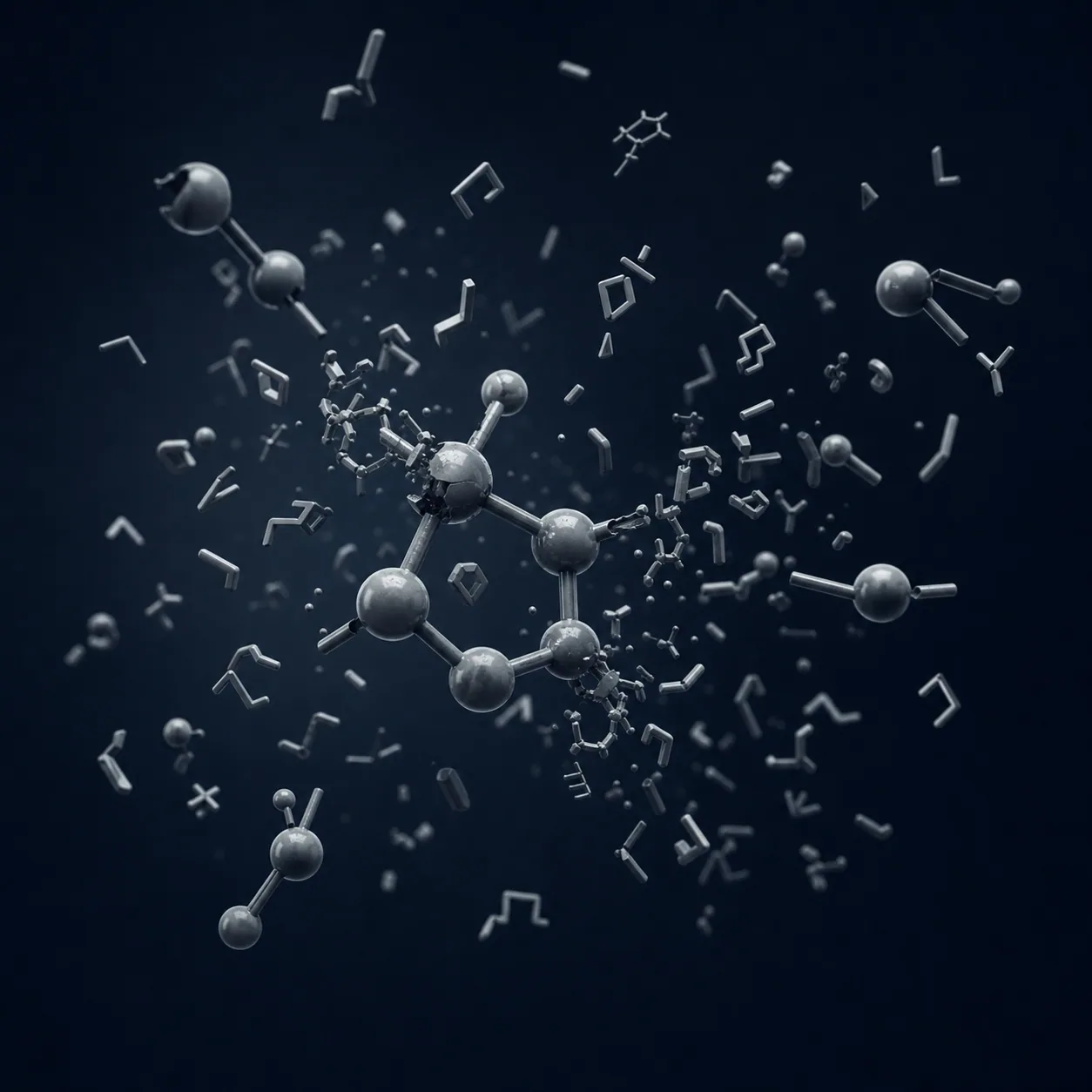
AI infers structure indirectly
Molecules are reduced to symbols and descriptors. Structural information is fragmented, leaving AI to guess.

AI sees structure directly
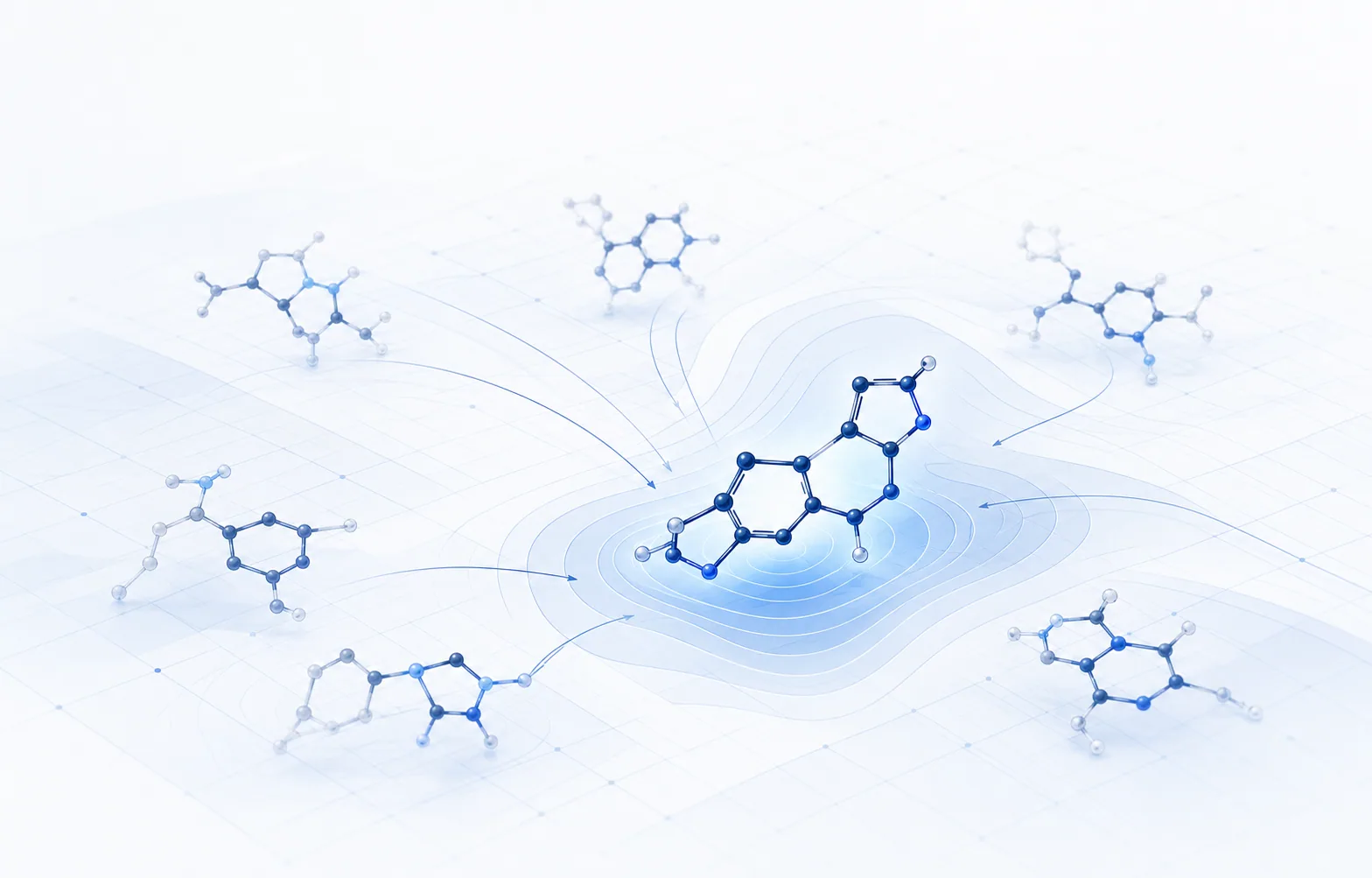
We aim to treat local 3D structure as an information-rich numerical representation.
Technology
PSM — the molecular structure standard for the post-AI era
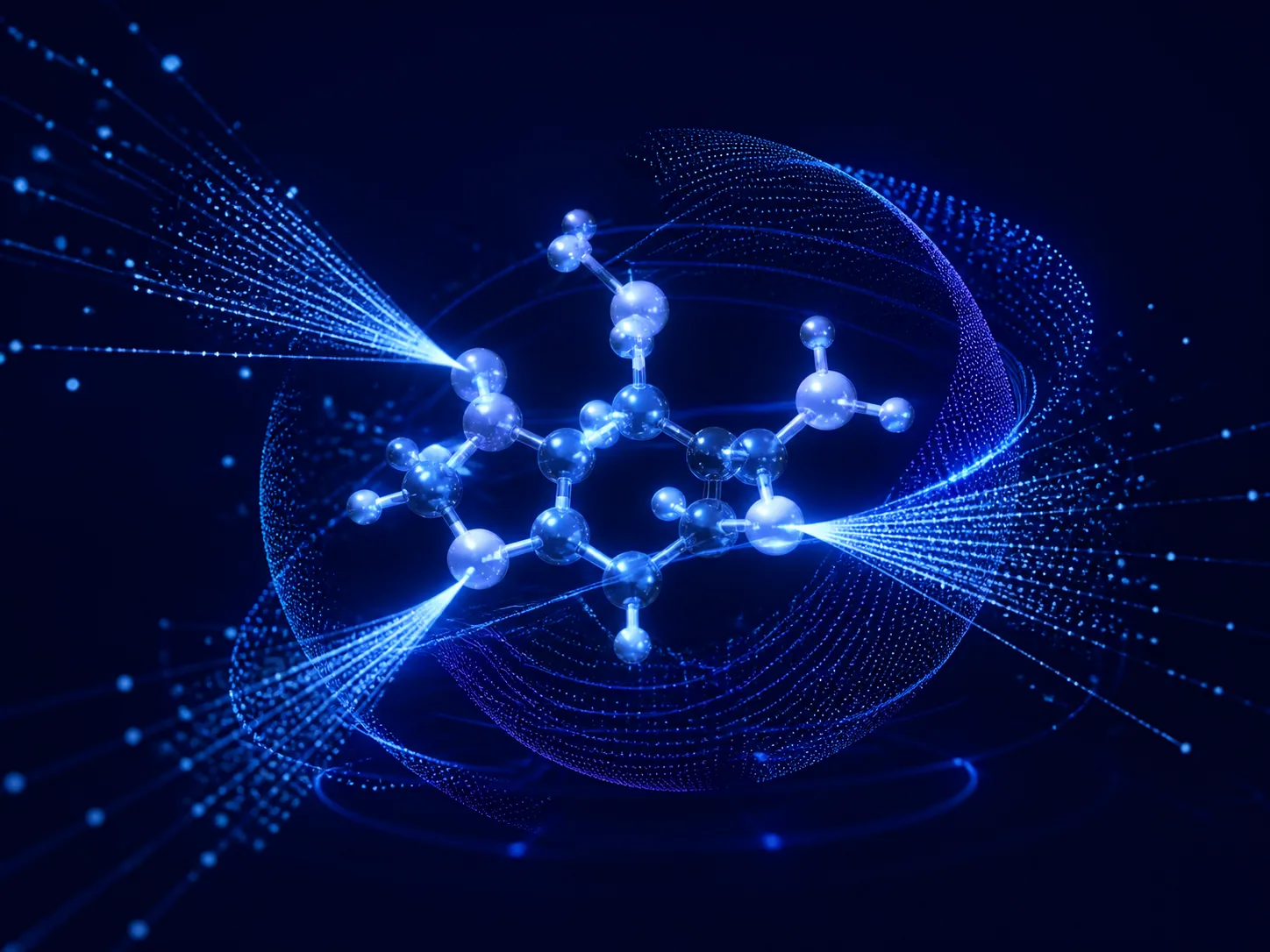
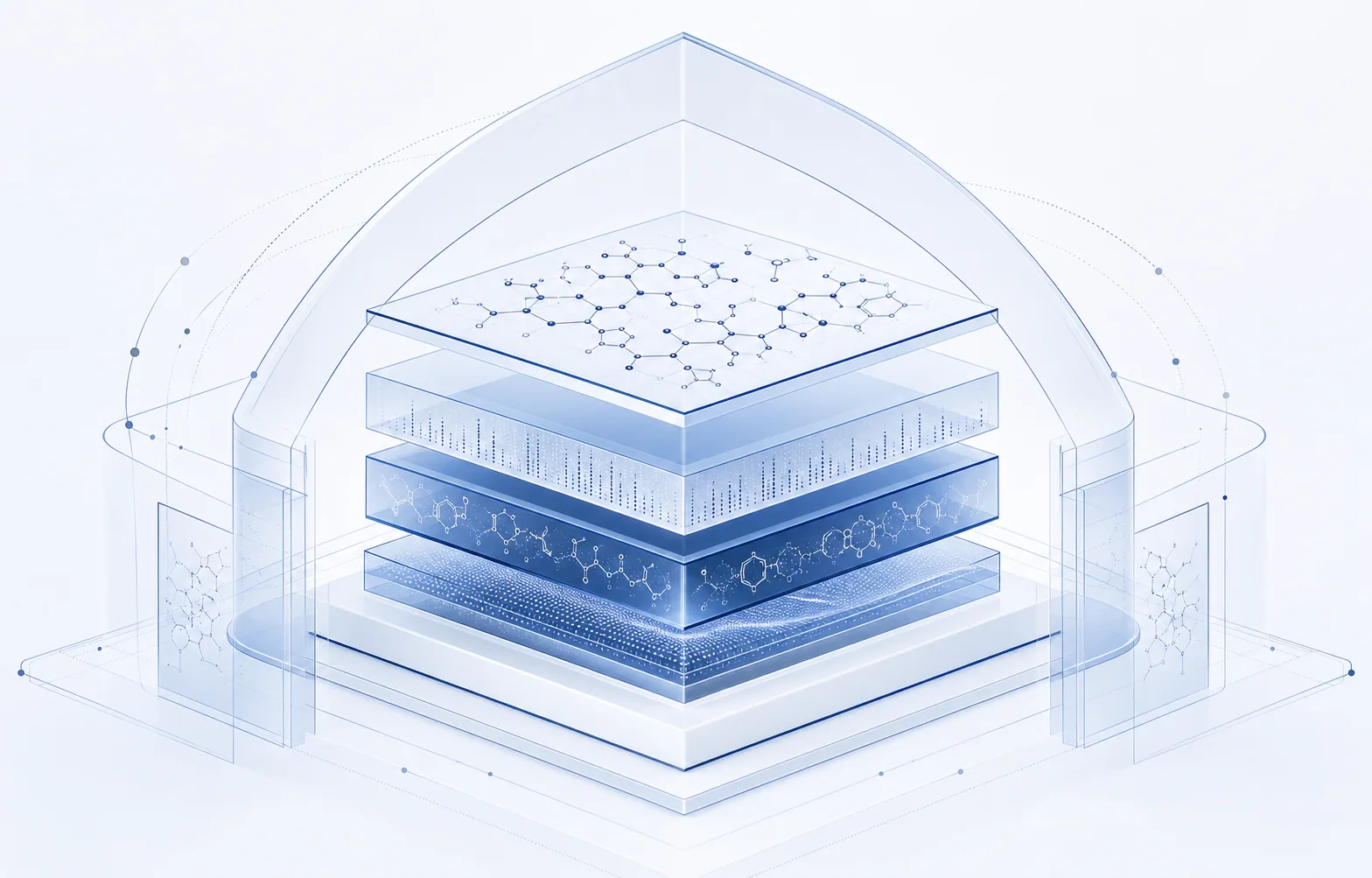
PSM (Proximity Score Matrix) is an input format for Chemical Vision AI that encodes a molecule's 3D geometry into an information-rich numerical representation; we are exploring its application to property and activity prediction.
-
Show, not describe
Rather than converting to symbols, PSM represents structure visually — a natural input for AI.
-
Information-rich representation
We aim to represent key structural information — such as interatomic distances, atom types and stereochemistry — as a numerical matrix.
-
A shorter path to discovery
From chance to theory-driven design — we aim to make chemical-space exploration in drug discovery more efficient.
*Technical details will be disclosed progressively within the scope we are able to share.
Platform
Toward seeing, searching and designing by structure
We are developing search, comparison and analysis by structure using the PSM representation. We envision future expansion to property prediction and de novo design (designing novel molecules from scratch).
Contact us →- Structure α Similar High
- Structure β Near Mid
- Structure γ Candidate Low
Approach
From chance to structural understanding
We propose a new approach to compound discovery. With a data format natural to AI, we are exploring the potential to reduce computational cost.
Conventional discovery (HTS)
Random search driven by experience and intuition.
Conventional AI discovery
Predicts likely hits by learning from surrounding data.
Pixeom's Chemical Vision AI
Operates on spatial (3D structural) features, with the aim of expanding toward structure representation and design support.
R&D
Toward small-molecule candidates from pharmacophore structures
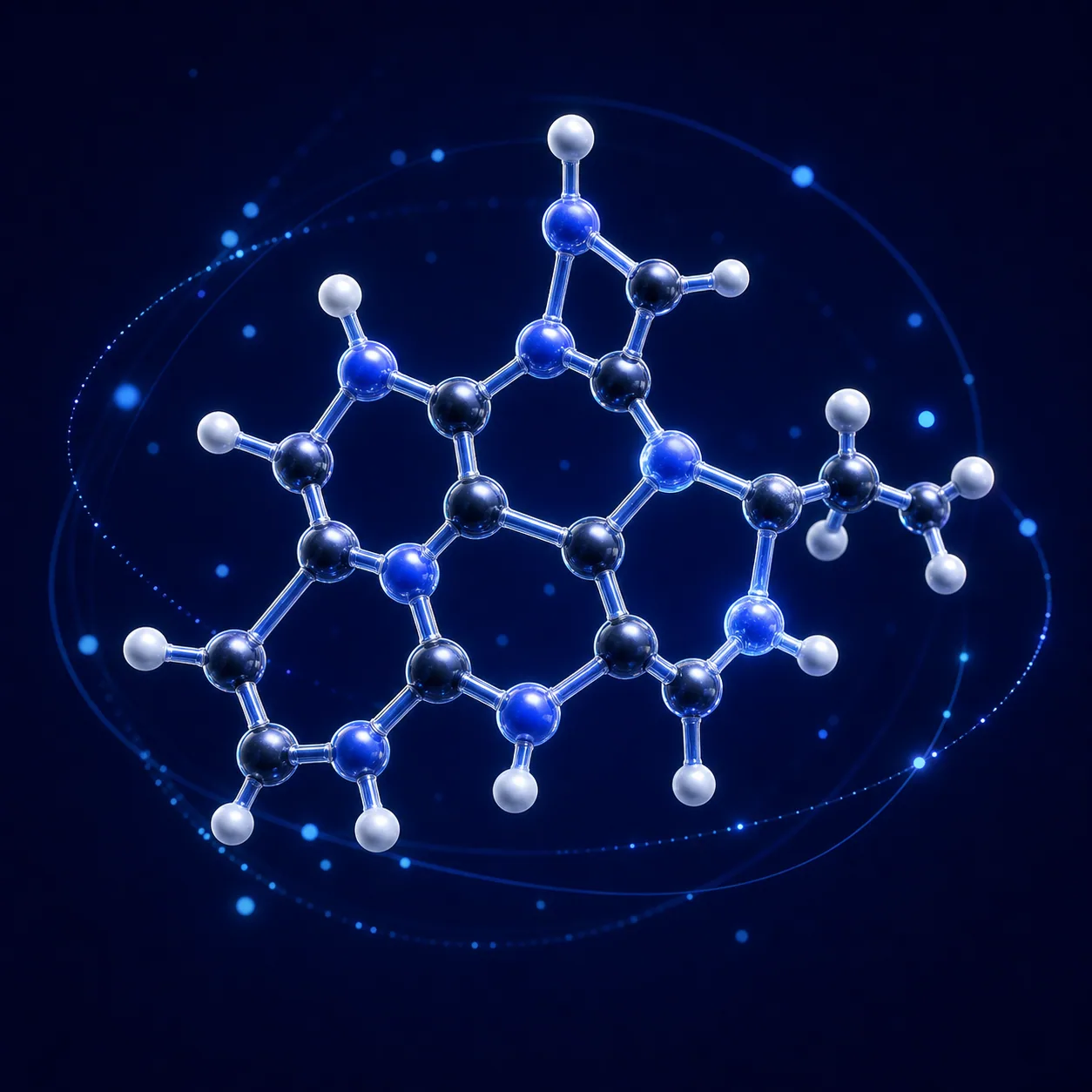
Pixeom is building a discovery platform that applies advanced AI for molecular visual recognition, with the aim of exploring small-molecule candidates for peptidomimetics (mimetic molecules). We take on the challenge — long considered difficult in existing drug discovery pipelines — of reducing pharmacophore structures derived from high-molecular-weight, complex molecules into low-molecular-weight forms, working to improve the efficiency of finding promising drug candidates among vast numbers of molecules.
At the core of the project
We apply AI's direct recognition of 3D structure to drug discovery. Unlike conventional rule-based, structure-extraction approaches, we aim for a representation in which AI can learn and compare shape patterns, exploring its application to complex structures such as peptides. Our goal is to establish a new drug discovery method that develops hard-to-develop molecules into small-molecule candidates suited to drug development.
Business
Toward creating value from structure, powered by PSM
Built on Chemical Vision AI, we are developing support services for search, analysis and design, with an eye toward expanding into our own drug discovery in the future, aiming to create new value grounded in structural understanding.
-
01
Discovery platform
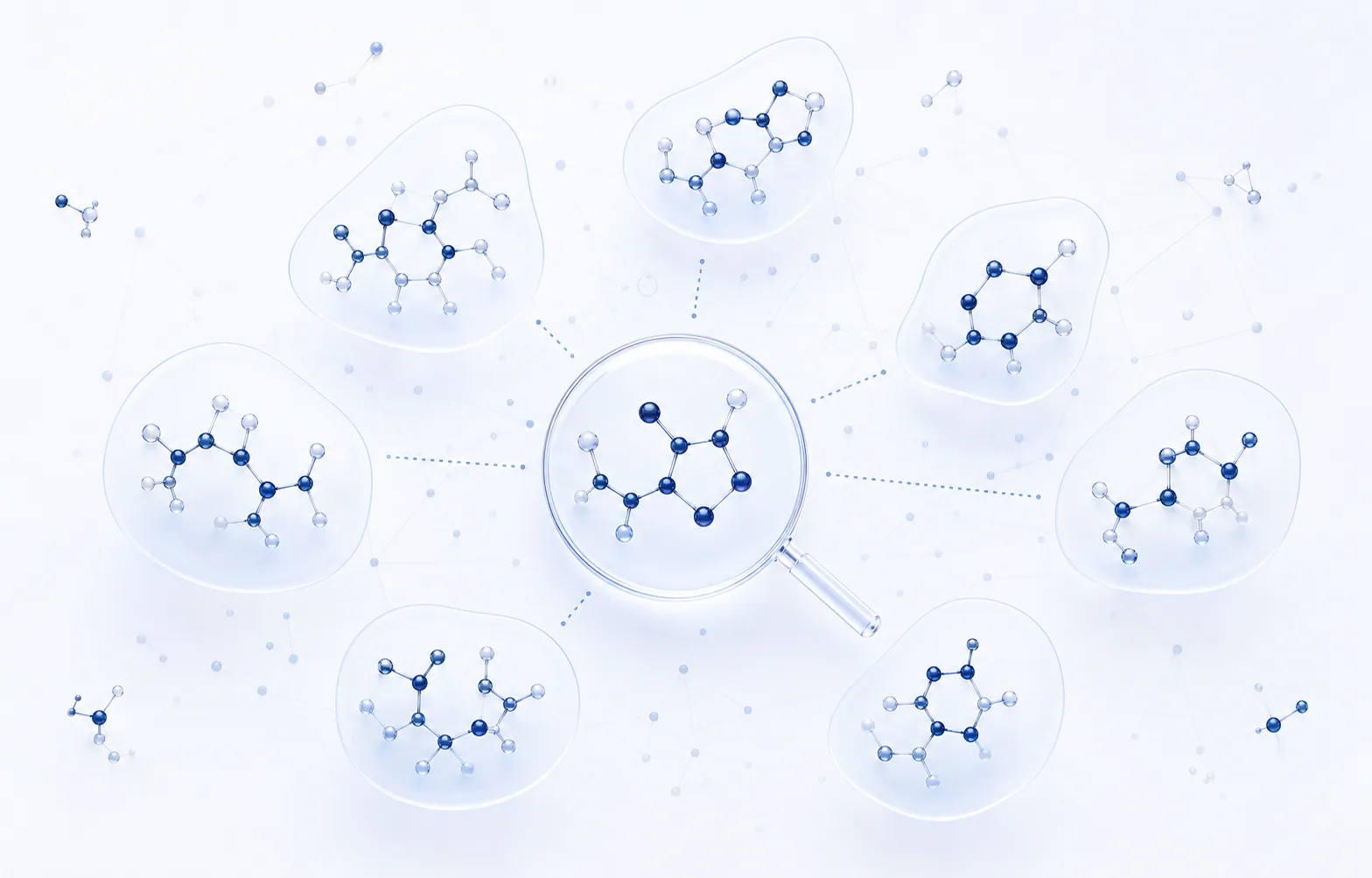
Search public data by structure, with potential application to similarity search and clustering.
-
02
Structure asset foundation
Securely manage confidential structural data, building a foundation to turn it into a usable structural asset.
-
03
Analysis & design services
Analyze chemical space in depth, with the aim of supporting molecular design and optimization.
Technology & IP
Technology seeds & intellectual property
Built on a proprietary molecular structure representation concept, we are developing a notation designed to show the 3D spatial arrangement of molecules directly to AI, aiming to expand toward recognition, similarity search and inverse design.
System, method and program for 3D structure identification
Roadmap
From research to business
We have defined clear steps to productize and commercialize our research, and development is progressing along the roadmap below.
- STEP 01 2025 Q4 Project launch
- STEP 02 2026 Q1 Internal PoC design and early validation
- STEP 03 2026 Q3 Prototype validation for joint research
- STEP 04 2027 Q1 Exploring an analysis-support service offering
- STEP 05 2028 Q1 Development toward SaaS expansion
The future we are building
Toward making Chemical Vision AI a standard foundation for drug discovery. We aim to bring structure-first understanding to research labs worldwide, working to raise the speed and certainty with which new medicines are born.
Company
Shaping the future of drug discovery, from Oita.
We turn compound data and assay systems lying dormant across universities and startups into assets grounded in structural understanding, aiming to build a new drug discovery ecosystem.
Leadership
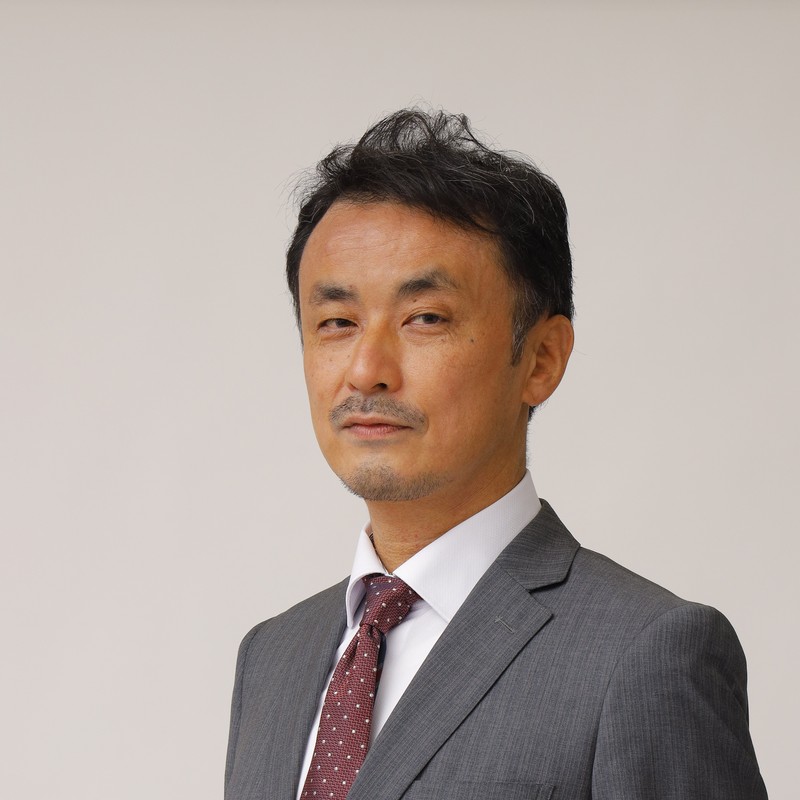
Specially Appointed Professor at Oita University School of Medicine; an expert in drug discovery applying molecular structural chemistry.
University of Tokyo graduate, Ph.D. in Science. With deep experience translating academic seeds into real-world impact, he is the proponent of PSMI (Proximity Score Matrix Image) and leads both theory and commercialization.
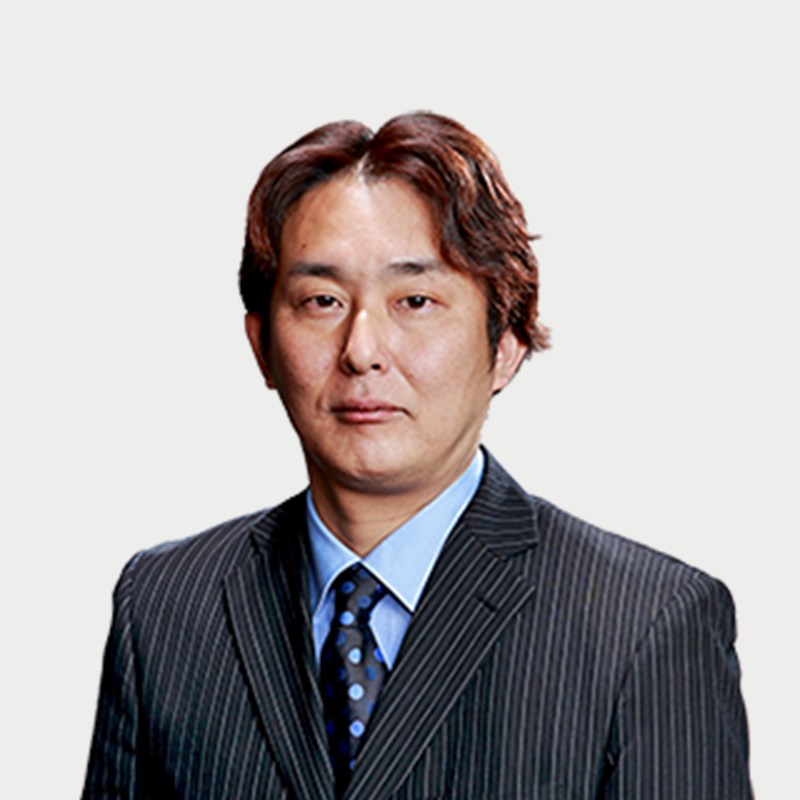
An expert in deploying AI into the real world, with extensive systems development experience.
Waseda University graduate. A hands-on engineer combining AI implementation and advanced image processing, he designs and builds the technical foundation of PSMI.
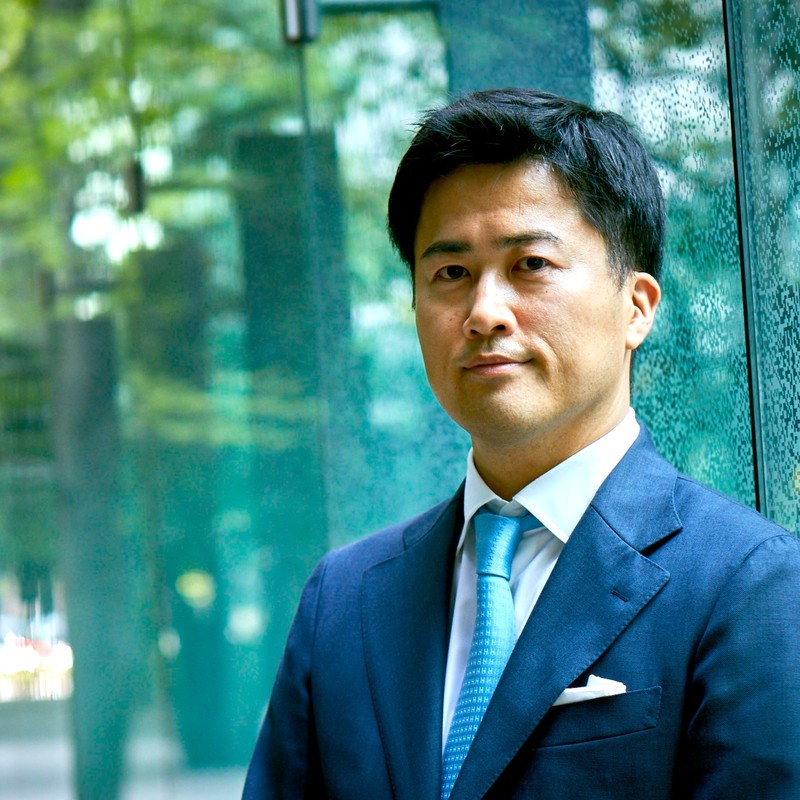
An entrepreneur with global finance experience.
State University of New York graduate. Versed in startup growth and fundraising, he drives long-term value through business strategy and financial planning.
Company Profile
- Company
- Pixeom, Inc.
- Address
- 423-4, 4F Research Management Organization Bldg., Oita University, 700 Dannoharu, Oita 870-1192, Japan
- CEO
- Shigeru Matsuoka, Representative Director
- Business
- Development of molecular design & analysis technology using a proprietary 3D structure notation / Support for pharmaceutical R&D
Contact
Contact
For inquiries about our technology and business, or to discuss collaboration and careers, please feel free to reach out.